
What Alma does
Alma has one job: keep the treatment plan alive after the patient goes home. Below is every capability, what it is for, and what it looks like in a real call.
Alma is in development. What follows describes the product as designed and demonstrated. It does not describe results from patient deployments, because there have not been any yet.
Medication reminders that name the medication
The problem.
Nearly half of patients do not take their medications as prescribed. For an older adult managing seven prescriptions, the failure is rarely refusal. It is confusion about which pill, at what time, on which day.
What Alma does.
Alma calls when a dose is due and confirms the specific medication by name and by the name the patient actually uses for it. She logs the confirmation. Missed doses accumulate into a pattern the care team can see.
The outcome.
The care team learns about a missed diuretic on day two, not at the emergency room on day nine.
In practice.
Abby, 78, manages congestive heart failure with a diuretic regimen she finds confusing. Alma calls to verify that she took her water pill, using the words Abby uses, then asks whether her ankles feel swollen today.
Demo. Scripted, performed by actors. Not a patient recording.
- Alma Hi, Gladys. It's Alma. I wanted to see how you were getting along this morning.
- Gladys Hello, Alma. I'm... I'm doing... okay. Just... cleaning up.
- Alma I hear you, Gladys. It sounds like you're working hard there. I notice you're having to catch your breath a little bit between words. Are you feeling a bit short of breath right now?
- Gladys Yes. Just a little... winded.
- Alma I understand. Let's take a pause on the cleaning for a moment. Are you near your favorite chair? I'd like you to sit down and rest while we talk.
- Gladys Okay. I'm sitting.
- Alma Good. Take a nice, slow breath for me. While you rest, did you manage to use your morning puffers, the Advair and Spiriva, earlier today?
- Gladys I took the Spiriva. I think I missed the other one.
- Alma That's okay, Gladys. Missing that Advair might be why it feels harder to breathe right now. Since you are sitting safely, can you reach your inhaler from where you are?
- Gladys It's right here, on the table.
- Alma Wonderful. Let's take that dose now to help open up your lungs. I'm going to stay on the line with you for a minute until your breathing feels a little easier.
- Gladys Thank you, Alma. Now I'm feeling better.
- Alma Thank you for doing that. Since you already took the Advair, that's the perfect first step. I'm going to make a note of this for your care team.
Symptom check-ins that produce usable clinical data
The problem.
After discharge, health systems lose all visibility. They cannot confirm whether a prescription was filled, whether rehabilitation started, or whether complications have begun. Staff fall back on manual follow-up calls that reach only a fraction of the panel.
What Alma does.
Alma calls to run the monitoring steps in the care plan and records the answers accurately. Weight, swelling, breathing difficulty and dietary adherence all become structured data attached to the patient record.
The outcome.
Care teams get daily signal from patients they would otherwise hear from monthly, or not at all.
In practice.
For a heart failure protocol, Alma runs a daily triage check for weight gain over two pounds in a day and for shortness of breath, and confirms the diuretic was taken.

Therapy and rehabilitation, guided to completion
The problem.
A reminder to exercise is not the same as exercising. Post-surgical patients abandon physical therapy quietly, and surgeons carry outcome liability for 90 days without any way to see what is happening at home.
What Alma does.
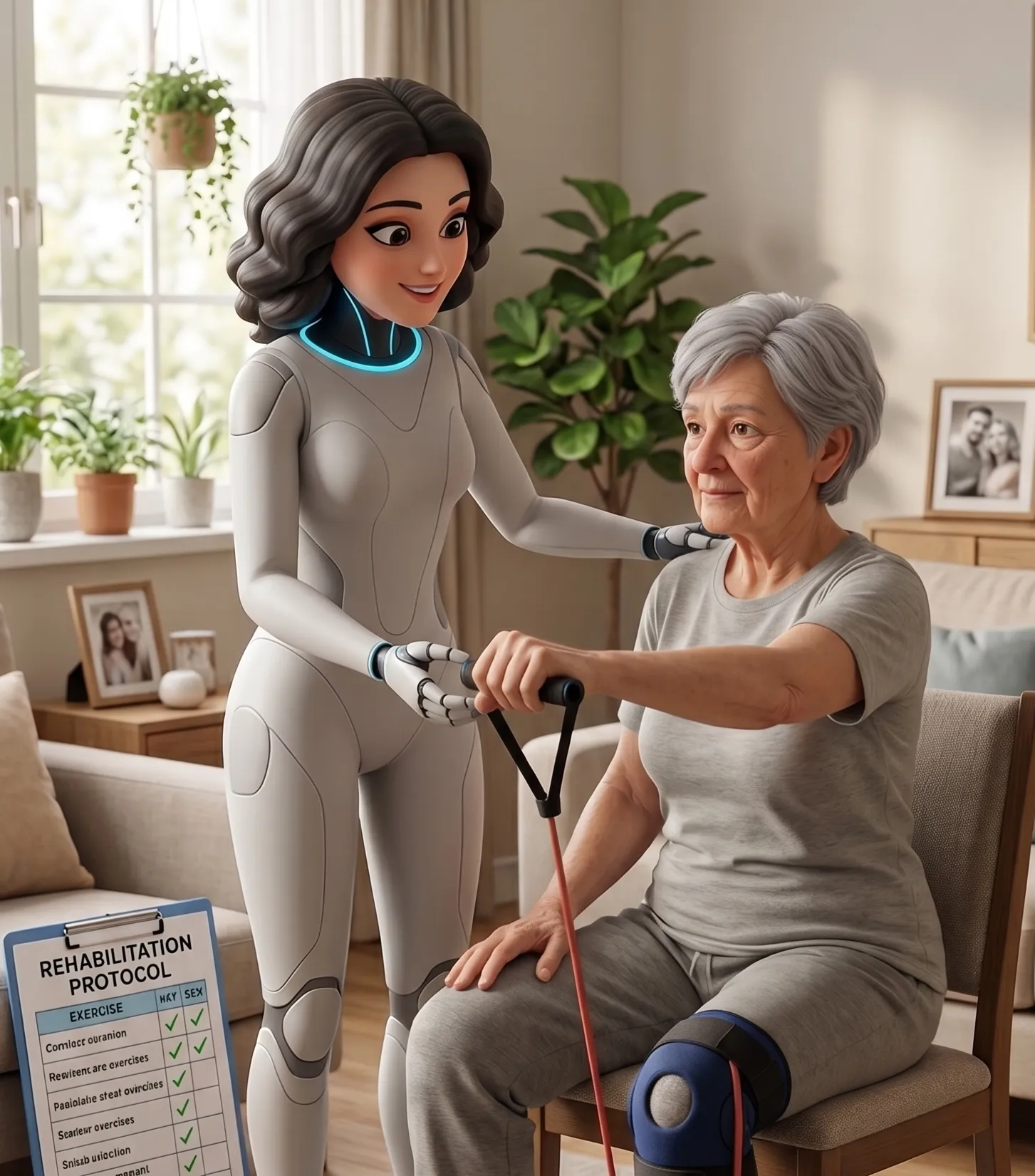
Alma stays with the patient through the session and guides them to complete it fully, rather than sending a single prompt. When a patient stops, she asks why, in a way that distinguishes a clinical problem from a motivational one.
The outcome.
The care team learns whether a patient needs pain management or encouragement, which are two very different interventions.
In practice.
Alma asks a post-surgical patient to rate pain from one to ten, then asks whether that pain is what is stopping the exercises.
Appointments, education and the questions people are embarrassed to ask
The problem.
Discharge instructions are delivered once, in a hospital room, to someone who is exhausted and frightened. Very little of it survives the car ride home.
What Alma does.
Alma reminds patients about follow-up appointments and delivers treatment education in plain language, repeated as often as the patient needs, without impatience.
The outcome.
Patients act on instructions they would otherwise have half-remembered.
In practice.
Alma shifts into a clear, patient teaching role for new post-operative instructions, then into a peer role to encourage a daily walk. The behavior adapts to the task.

A voice that adapts to the person
The problem.
Talking about your own health is vulnerable and often frightening. A cold, scripted automated call gets hung up on, and a patient who hangs up produces no data and gets no support.
What Alma does.
Alma is designed around what almyhealth calls Empathy Mirroring. She reads shifts in mood and stress through tone and phrasing, and acknowledges what she hears before moving to the clinical task. She also adapts her behavioral role to the situation: a teacher for new instructions, a peer for daily habits, a firmer advocate when a critical safety step like insulin has been missed.
The outcome.
Patients stay on the call. Engagement is the precondition for everything else the platform does.
In practice.
If a patient is grieving, Alma acknowledges that mornings can be quiet before guiding her toward her health routine.

What this is not.
This is emotional support and companionship. It is not therapy, not counseling, and not mental health treatment. Alma does not assess or diagnose any mental health condition.
- Abby
Oh, hello, Alma. It was okay. I tossed and turned a bit.
Reads shifts in mood and stress through tone and phrasing.
- Alma
I'm sorry to hear that rest was difficult. Let's make sure today goes smoother.
Acknowledges what she hears.
- Alma
I see it's time for that important water pill, the Lasix.
Before moving to the clinical task.
- Alma
Did you manage to take that with your breakfast already?
Language and culture that match the patient
The problem.
Translation is not the same as fluency. A senior who switches between English and Spanish mid-sentence will not build trust with a system that handles only one of them.
What Alma does.
Alma is designed for bilingual and multicultural older adults, with models trained on regional dialects rather than generic translation.
The outcome.
Cultural fit builds trust, and trust is what makes a patient answer the phone tomorrow.
In practice.
Alma opens a call with Mateo, 68, in Spanglish, asks about his morning blood sugar, and asks how many tortillas he had with breakfast.

Escalation to a human, by design
The problem.
An AI that keeps talking when it should be fetching a nurse is a liability, not a product.
What Alma does.
Alma is built on a safe-by-default framework that recognizes when AI has reached its limit. When she detects a symptom outlier, a cognitive lapse or a concerning emotional shift, she triggers the Safety Network Alert System. The alert reaches the clinical team on the almyhealth for Providers dashboard, with the triggering content documented.
If Alma detects a credible expression of suicidal ideation, self-harm intent or acute psychological crisis, she escalates immediately to a human and surfaces the 988 Suicide and Crisis Lifeline and the Crisis Text Line. This escalation is not dependent on the patient having internet access or the app.
The outcome.
Clinicians are pulled in exactly when they are needed, and not before.
In practice.
Repeated missed doses of a heart failure medication generate an alert. A staff member makes a short, targeted call. That human call is also what makes the encounter billable under Medicare remote therapeutic monitoring rules, which do not accept automated prompts.
A command center for the care team
The problem.
Adherence data that nobody can see does not change care.
What Alma does.
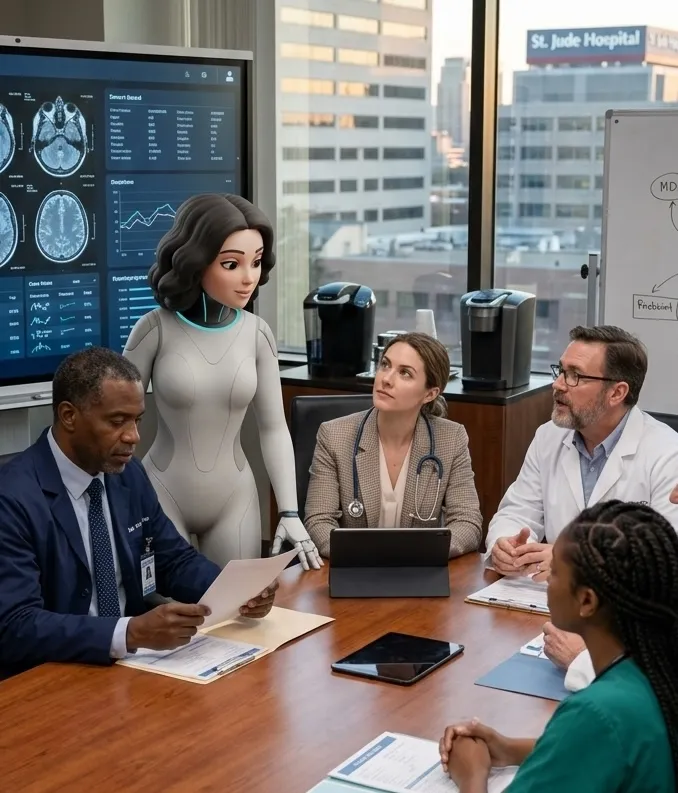
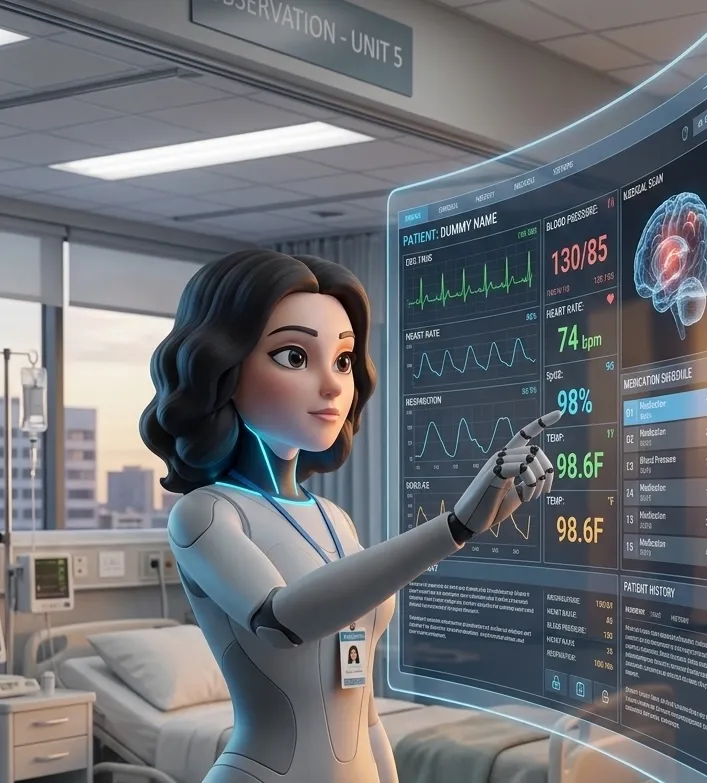
The almyhealth for Providers dashboard is the clinical command center. Care teams configure treatment plans, monitor adherence as it happens, review predictive analytics, generate reports and respond to Safety Network alerts. Access is role-based, and every session is logged.
The outcome.
A small clinical team can supervise a large panel, and intervene early rather than after an admission.
In practice.
A practice reviews the overnight alert queue at 8am and calls four patients, instead of calling four hundred.
Integration.
almyhealth is designed to connect to existing clinical systems through FHIR APIs, with planned interoperability for major electronic health record platforms including Epic and Cerner, plus custom integration through our API for existing workflows.
What Alma does not do
We would rather you know this before the first call than after.
- Alma does not diagnose any condition.
- Alma does not prescribe, change or stop any medication.
- Alma does not provide therapy, counseling or mental health treatment.
- Alma does not replace your doctor, your nurse, your caregiver or your family.
- Alma is not an emergency service. In an emergency, call 911.
- Alma is not currently a regulated medical device, and almyhealth makes no claims of clinical benefit that have not been demonstrated.